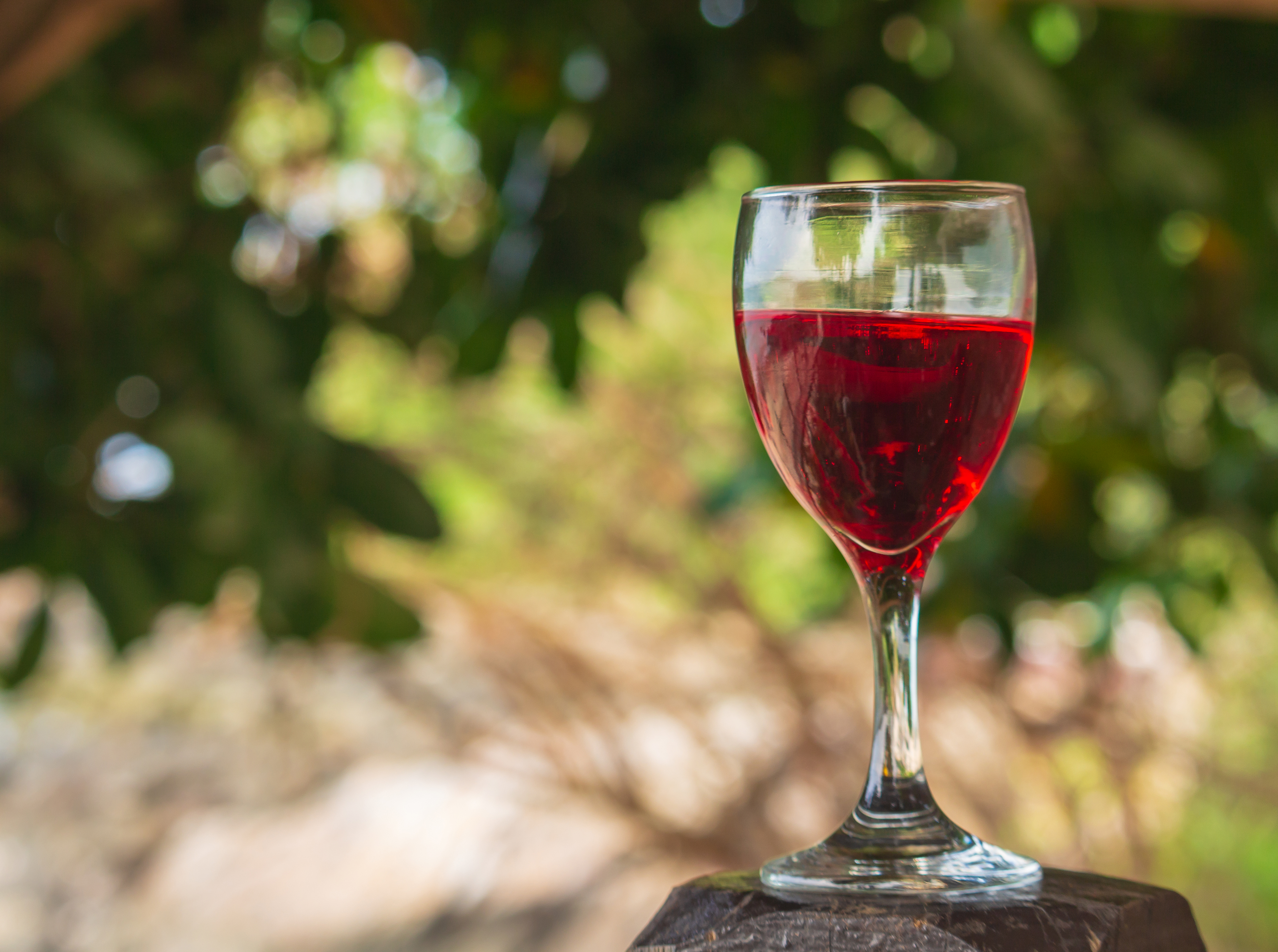
Every once in a while, the issue of the proper place, of any, of alcohol-containing drinks (and foods) among believers comes up for consideration. These discourses usually assume the form of needless debates festering into nasty animosity among brethren who were supposedly redeemed by love. Actually, such an outcome should not be surprising whenever Christians leave the absolute reliance on Scripture as source of doctrine and begin to admit and give credence to extra-biblical influences based on various personal preferences. One way this plays out is in lack of consistency in the application of whatever principles the contestants claim to be defending.
Under such circumstances, there will continue to be hindrances to the development of proper bible-based doctrine on alcohol use. My quest here is to present a few precepts which I have been led to see as essential to any eventual position the Church may take, if ever.
Two broad statements are made:
1. Taking of alcohol is permitted,
2. Inappropriate taking of alcohol is a sin.
Now, let us take a detailed look at each of the two:
No one reading the Bible with an unbiased conscience will deny that it does not forbid the taking of alcoholic drinks provided there is no drunkenness. In both the Old and the New Testaments, the Scripture is replete with uses of alcohol in ways and situations sanctioned by God, even when every form of abuse is always harshly rebuked.
Perhaps the most popular example of divine permission of alcohol is the miraculous feat of our Lord at Cana of Galilee. While not denying that many carnal people only use this incident as an excuse to justify their desire to binge on alcohol, there is no escaping the fact that Jesus would never have produced wine if it was a sinful product, nor would He have even specifically instructed that the drink be presented to the chairman of the wedding party. This would have been tantamount to tempting the poor man to sin - and we know that God does not tempt anyone to sin (James 1:13) Further, the text of the passage is very clear that the fluid was indeed alcohol-containing wine as used customarily by the society and not some nonalcoholic grape juice as some people have tried to suggest.
Similarly, with respect to the qualification of pastoral leaders, the requirement was, "not given to wine" rather than total abstinence. (1 Timothy 3:3). Similar word was directed at deacons and lay women leaders. (1 Timothy 3:8; Titus 2:3)
I personally always like to point out to people that Paul's instruction to Timothy to use alcohol for his stomach ailment can not be casually waved off as a special medical situation which could be excused. Here's the word of admonition:
"No longer drink only water, but use a little wine for your stomach's sake and your frequent infirmities." (1 Timothy 5:23)
Regardless of your take on this verse, one thing is clear: the Bible never prescribes a sinful remedy for any ailment. If Timothy's problem had been sexual lusting, would Paul have recommended "a little rape or fornication" as remedy? And if Timothy had been married and he had started having sexual hunger on missionary trip, Paul would no doubt have released him on leave to go home to his wife for a season.
This is a very important point. You see, sinful activities come in two major ways: (1) Those that are sinful by their very act, such as lying and idolatry and (2) those that are sinful on account of circumstances of their performance, such as sex and killing. Use of alcohol belongs to the second group. Like sex, alcohol is not a sin in itself but easily becomes sinful if misused through rape, adultery, fornication, homosexuality, bestiality, etc on the one hand, and drunkenness on the other hand.
So, this is why Paul could advice. "use a little wine" but never "go get drunk!"
Still on this point, if the mere taking of alcohol is a sin, then it is sinful to take cakes and other food items preserved or enhanced with alcohol. The same goes for every medicinal or pharmaceutical remedy taken orally which contains alcohol. Would it not be hypocritical then, to continue ingesting so many alcohol-containing drugs, including some cough syrups?
Perhaps the most instructive evidence against teetotalism is the fact that alcohol was used both by our Lord Himself at the Last Supper and by the apostles after Him for Holy Communion. One evidence of this is that Paul had to rebuke some members of the Corinthian church for getting drunk on the communion wine. If it was a mere unfermented grape juice, could its abuse have caused drunkenness?
Some people have tried to claim that the wine used by Jesus was ordinary unfermented juice, shoring up their position by appealing to the use of the phrase "fruit of the vine" (Luke 22:18). Such would run contrary to the narrative starting with the celebration of the Jewish Passover. Even Jesus Himself was not a teetotaler. To deny this is to say that the charge of calling Him a "winebibber" was in respect of a nonintoxicating drink! (Luke 7:33-34).
"For John the Baptist came neither eating bread nor drinking wine, and you say, 'He has a demon.' The Son of Man has come eating and drinking, and you say, 'Look, a glutton and a winebibber, a friend of tax collectors and sinners!' "
"Winebibber" is definitely NOT a word used for users of nonalcoholic drinks!
So, obviously, Jesus was not ascetic but it seems the fallen nature in us loves to ascribe spirituality to the works of ascetic life, thereby discounting His grace.
Despite the undeniable freedom to use alcohol-containing drinks, food, medicines and preservatives, the Scripture nevertheless looks very gravely at any form of abuse in the exercise of this liberty. This is yet another instance of God's requirement of all His people to be responsible stewards.
But a basic question must be addressed: What exactly constitutes an abuse? In what way is, and under what circumstances does, the taking of alcoholic drink become irresponsible and sinful? Indeed, what does the word "drunkenness" mean in a biblical context?
It is necessary for believers to understand that biblical concept of drunkenness is not exactly same as the secular view and is not defined by blood concentrations of the substance. The fact that alcohol is not primarily sinful does not mean it cannot be a cause of, or temptation toward, sin. Indeed, alcohol certainly has a propensity to lead to sin unless due heed is taken. In this regard, alcohol is comparable with money, which in itself is not a sin, but if anyone loves it, all manners of sin ensue (1 Timothy 6:10). Similarly, the love of alcohol is a root of all types of evil. For this reason, the Bible does not spare efforts in strictly warning about the dangers, both physically and spiritually, that may attend the love for, and inappropriate use of alcohol. Yet, it would be wrong to say that such warnings constitute a prohibition or an equating of the mere ingestion of alcohol with sin - just as the mere possession or spending of money does not define sin.
DIMENSIONS OF INAPPROPRIATE USE
I have found it useful to place the dimensions of abuse of alcohol into four groups. Each group is identified by the primary target of hurt or destruction caused by the abuse. We may briefly look at them now:
1. Any use that hurts the Kingdom
Any ingestion of alcoholic beverage which negatively affects the spiritual life of weak brethren is wrong and inappropriate. (Romans 14:21) Similarly, any exercise of our "liberty to drink" which presents the Church in a poor light and brings occasion for the name of the Lord to be blasphemed is a sin. Of such is starting to drink early in the morning (Acts 2: 13-15).
Also, a child of God should not be so given to alcohol that he becomes vulnerable to enemies of the Kingdom. An incapacitated soldier is a loss to the whole army, not just himself.
2. Drinking that hurts God-given resources
When inappropriate amounts of time, money, efforts or other resources are used on drinking, poor stewardship is recognised. And that is a sin. It has nothing to do with the level of intoxication, if at all. For example, spending two hours at drinking is poor stewardship of time even if all you consume is half a tot of wine. Biblically, it is "drunkenness", and described as "lingering long at wine" (Proverbs 23:30)
This is only made worse if the excessive use of time is also associated with excessive spending of money and/or excessive ingestion of the drink. With the financially unstable, this leads invariably to poverty. (Proverbs 21:17)
3. Drinking that hurts the human body
God is very concerned about our physical body. It is where He dwells as His temple, and the means by which the work of the Church is done on earth. Indeed, the Bible says, "...the body is...for the Lord, and the Lord is for the body. " (1 Corinthians 6: 13) So, any use of alcohol that hurts the body, and limits it in performing its role, is sinful.
Of this category is drinking that causes dizziness or staggering (Job 12:25), that affects the thinking faculty or causes forgetfulness (Proverbs 31:5-7). As seen in the lives of Noah and Lot, also sinful is every level of drinking that causes abnormally-deep sleep, stupour, or outright passing out. There could also be physical injuries and falls.
But by far the most serious types of physical hurt to the body are seen in chronic abusers of alcohol. Ailments ranging from peptic ulcer, liver cirrhosis, cancer and even insanity are not uncommon earthly trophies gained by those who are mighty in drinking.
4. Drinking that hurts the soul
It is not often appreciated that the effect of inappropriate use of alcohol often extends to the soul. The Bible rightly identifies complacency and laziness (Zephaniah 1:12), loss of confidence (Jeremiah 23:9), sorrow (Proverbs 23:29-30) guilt and immorality and perversion. Many individuals have been known to engage in crimes and sins under the influence of alcohol including crude speaking, fornication, adultery, thuggery and even murder, that they would never have considered if they were sober.
In the final analysis, there is only one consequence of drunkenness:
"...shall not inherit the kingdom of God"(Galatians 5:21)
All the issues mentioned above are more than mere causes or ordinary temporary inconveniences. Falling foul of any of the categories that define alcohol abuse or drunkenness is not just a social lapse that merely brings discomfort to the person. Rather, it is a mortal sin with eternal consequence.
Actually, such dire gravity may be one of the reasons why some Church leaders often decide to teach a preemptive doctrine of teetotalism as a way of "helping" weak believers not to sin. But such a doctrine is unbiblical and therefore false. A lie cannot be used to correct another lie.
Also, as flesh cannot do the works of the spirit, all such well-intentioned doctrines of men have no power at all to achieve the intended supposedly good purpose (Colossians 2: 20-23). Only the word of God can do that.
Let us therefore be faithful in preaching the pure word. The Lord Himself is well able to make His children stand, and walk in the truth. No gimmicks are required.